Issues Management Tracker & Template
End-to-end issues tracking and remediation management for risk and compliance teams.
Price
$49
One-time. No subscription. Use forever.
Delivered immediately after checkout — your template and guide links are emailed to you with your receipt.
Built for risk and compliance teams at financial-services organizations
◆ Quick buying summary
What you get and when you can use it
- Good fit if
- You're managing Matters Requiring Attention (MRAs) or audit findings in a spreadsheet that doesn't show status, ownership, or aging
- Format
- Editable workbook plus PDF/supporting guide materials where included. Instant download after checkout.
- Need the methodology first?
- Read the Issues Management Tracker Template Guide.
- Time to value
- Start reviewing, editing, and assigning owners the same day; customize to your organization before sharing outputs externally.
- After purchase
- After payment, download every file immediately from the confirmation page. RiskTemplates also emails a secure access link, and Stripe sends the payment receipt separately. No account required.
◆ What's included
- ◆ Issues Register with automatic risk rating, days open, days overdue, and status flags
- ◆ Checks column that flags target dates past the limit for the risk rating without an extension justification, ratings below the regulatory floor for MRAs, MRIAs and consent orders, and finding IDs that don't match the Exam tab
- ◆ Exam & Regulatory Findings tab: regulator reference, finding type, management response, and response and remediation deadlines
- ◆ Root Cause Analysis tab: 5-Whys worksheet with root cause category and systemic-issue flag
- ◆ Closure Validation checklist: 10 items the independent validator completes before an issue closes, with validator and validation date required
- ◆ Dashboard: open, critical, and overdue issues, closed this quarter, aging, business line, root cause trend, 12-month opened vs. closed, and due within 30 days
- ◆ Severity Matrix: heat map that drives the risk ratings, remediation limits by rating, and regulatory rating floors, plus editable dropdown lists
- ◆ Linked KRI ID column that ties issues raised by a KRI breach to the KRI Library
- ◆ 56-page framework guide PDF: methodology, evidence standards, regulatory context (including where fintech findings come from after the CFPB's 2025 shift and the September 2026 proposed third-party guidance), and a worked example
Use rights: customize for internal business use and use outputs with your auditors, customers, bank partners, and regulators. Do not resell or redistribute the template files.
◆ Preview
See what the template covers.
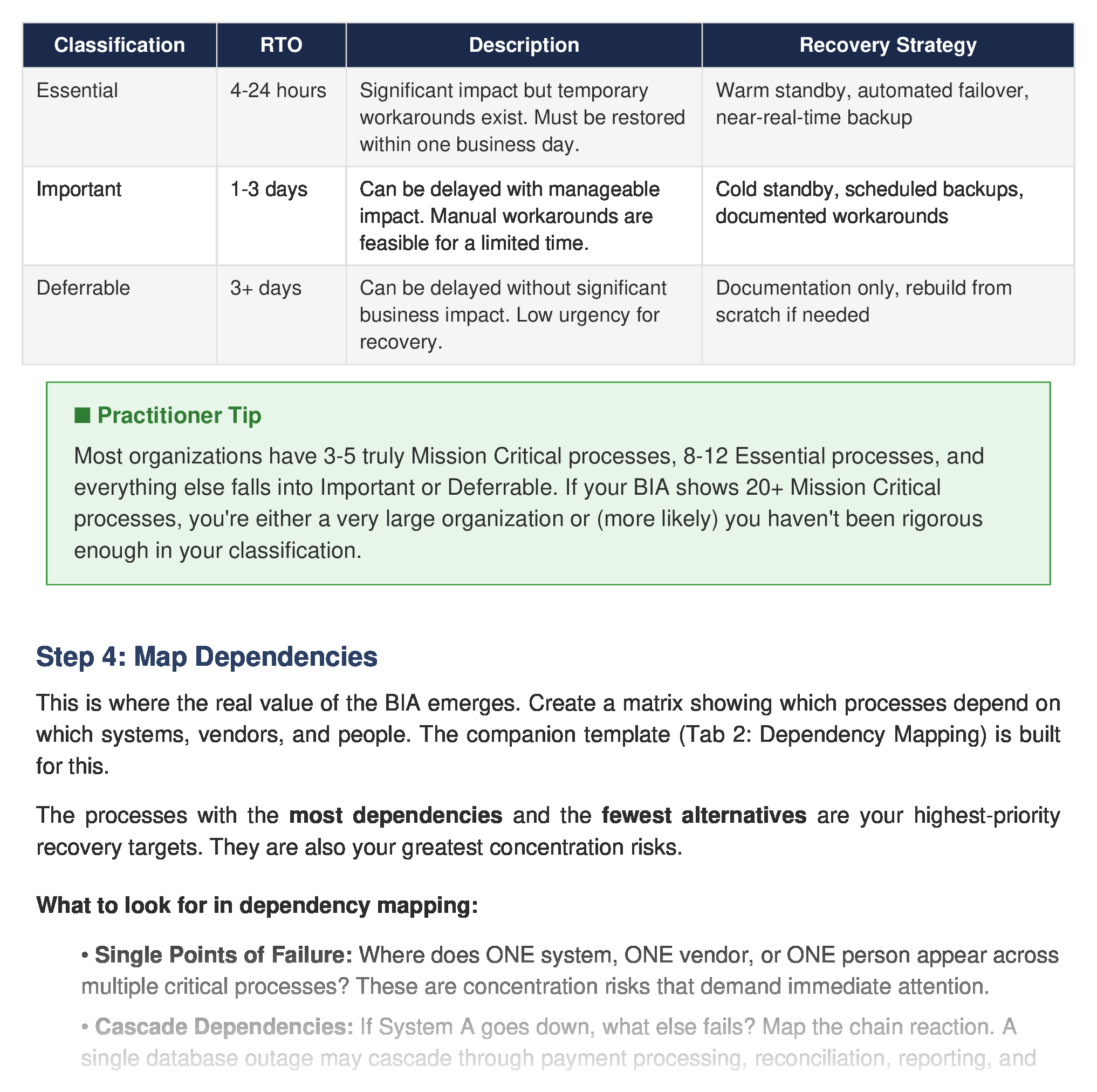
Guide page: the five-stage issues management lifecycle with who is involved and exit criteria for each stage
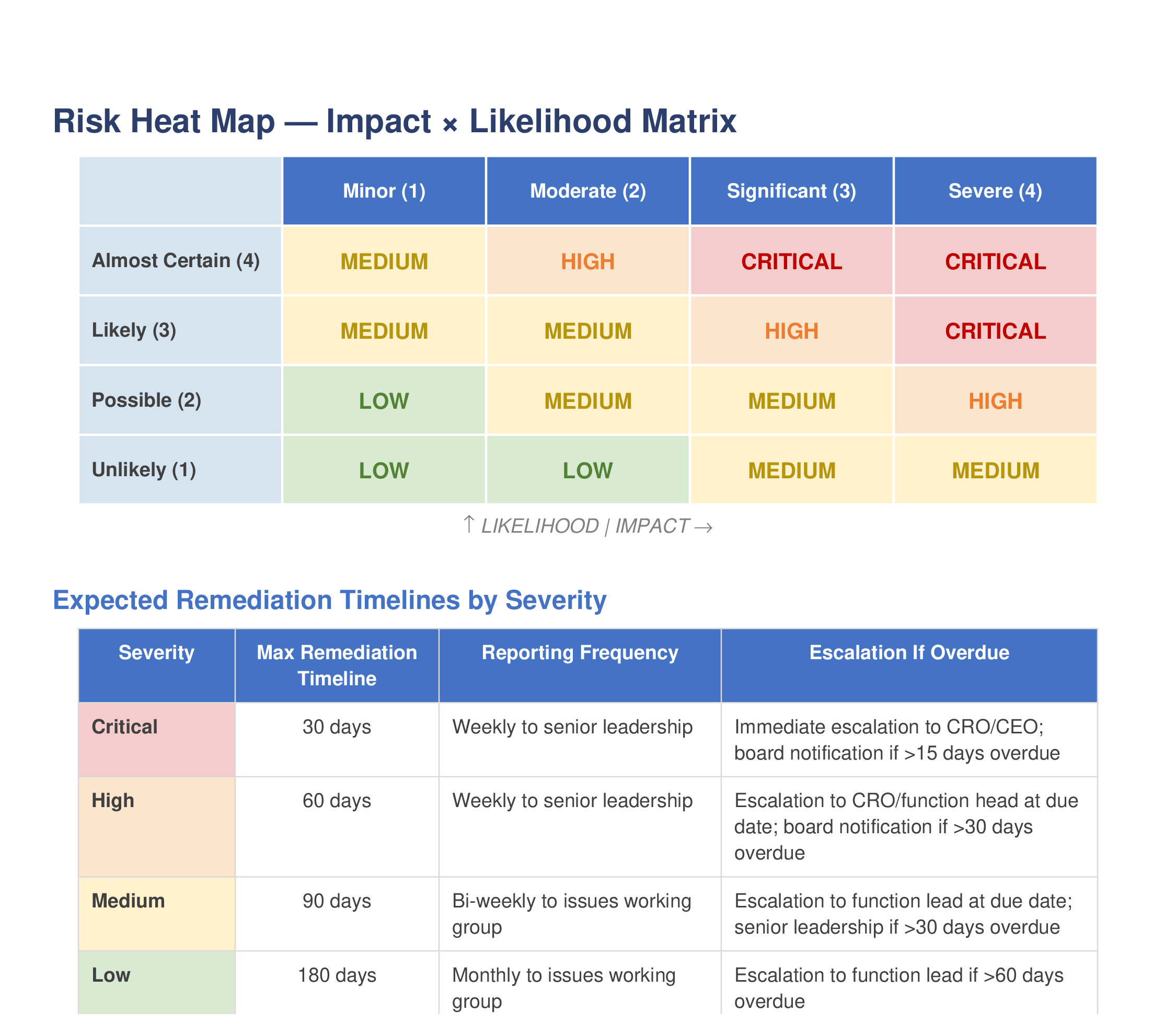
4×4 risk heat map (Impact × Likelihood) and remediation deadlines by risk rating: Critical 30, High 60, Medium 90, Low 180 days
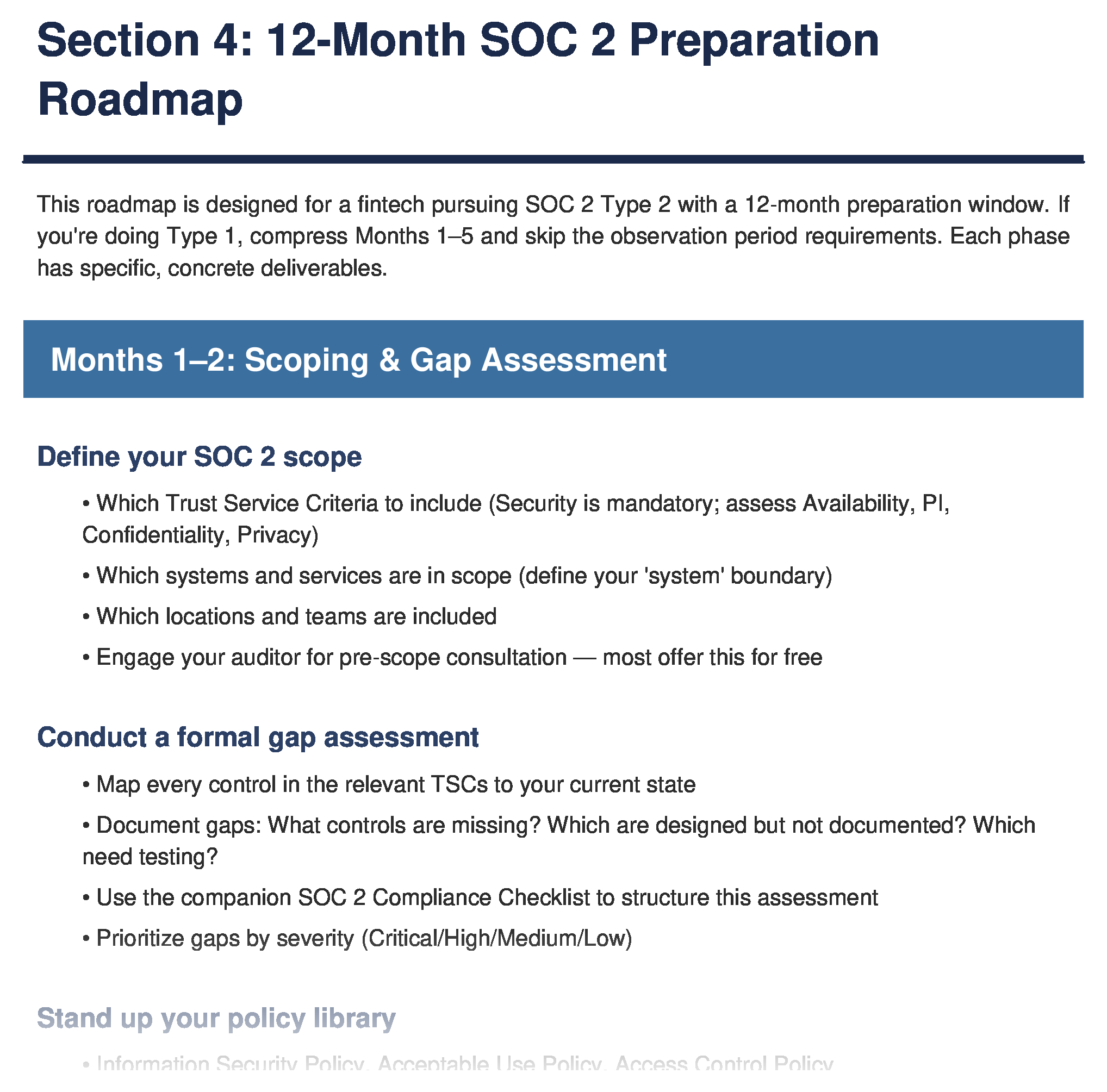
Risk acceptance requirements and approval authority by residual risk, with maximum periods and review frequencies
◆ Template guide
Issues Management Tracker Template Guide
How to build an issues management tracker for risk and compliance findings: severity ratings, action plans, owners, target dates, second-line review, aging, and escalation — from intake to validated closure.
◆ FAQ
Frequently asked questions.
What types of findings does this tracker cover?
Every source a fintech deals with: self-identified issues, internal and external audit findings, regulatory exam findings, bank partner reviews, Nacha rules audits, KRI breaches, incidents, customer complaints, third-party and SOC report exceptions, and control testing. Each issue is tagged by source, risk category, and business line, so you can filter and report on any of them.
How does the root cause analysis work?
The Root Cause Analysis tab is a 5-Whys worksheet: problem statement, up to five whys, a root cause statement, the category (People, Process, Technology, or External), whether it is systemic, and the preventive action. A check column flags when the category doesn't match the Issues Register, and the dashboard trends root causes across all issues, the last 12 months, and open issues.
What does the dashboard show?
Open, critical, high, and overdue issues; average days open; issues closed this quarter; open regulatory findings; overdue action plans; and the share of issues you self-identified. Below that: issues by risk rating, status, risk category, aging bucket, and business line, a root cause trend, issues opened vs. closed for each of the last 12 months, and a list of what's overdue or due within 30 days. Everything calculates from the register.
Does it track Matters Requiring Attention (MRAs) and other exam findings?
Yes. The Exam & Regulatory Findings tab has one row per finding with the regulator or reviewer, exam name and dates, finding type (Matter Requiring Attention, Matter Requiring Immediate Attention, the FDIC's Matter Requiring Board Attention, violation, supervisory recommendation, consent order article, examination finding, bank partner or audit finding), the regulator's reference number and wording, your management response, when the response was due and sent, and your committed remediation date. Link the finding to its register issue and the status and rating pull through. Flags call out missed responses and commitments, broken links, and issues rated below the minimum for the finding type.
How many issues is this designed to handle?
About 300 rows of issues and action plans, which covers most teams managing up to 100–150 open issues. Beyond that, most programs move to a dedicated GRC platform.
What does the closure validation checklist include?
Ten items the independent 2nd line validator answers Yes, No, or N/A before closure: all action plans complete, evidence that meets the standard for the type of fix, root cause (not just the symptom) addressed, every gap in the original issue covered, operating effectiveness tested on a sample, a walkthrough or re-performance, related risks and KRIs updated, regulator or sponsor bank informed where applicable, owner sign-off, and validator independence. It reads "Ready to close" only when no item is No, items 1 and 10 are Yes, and the validator and validation date are filled in.
Does it work in Google Sheets, and is anything locked?
It works in Excel 2016 or later, Excel for Mac, Google Sheets, and LibreOffice. Nothing is locked or password-protected: every sheet, formula, and dropdown list is editable.
Can I share completed outputs externally?
Yes. You can use completed outputs with auditors, customers, bank partners, regulators, and internal stakeholders. Customize the template for internal business use — just don't resell or redistribute the source template files.
How do I receive the files?
Checkout is handled through Stripe. After payment, download every file immediately from the confirmation page. RiskTemplates also emails a secure access link, and Stripe sends the payment receipt separately. No account is required.
What if it's not a fit?
Email within 30 days for a full refund, no questions asked. The guarantee is meant to remove purchase risk while you evaluate whether the template fits your use case.
● First-time buyer offer
Get 20% off your first template.
Drop your email and we'll send the code.
◆ Not ready to buy?
Start with the free Risk Register.
141 pre-populated fintech risks across 21 categories. ISO 31000 structure.
Download free Risk Register →◆ Related templates
Pairs well with.
AI Risk Assessment Template & Guide
Comprehensive AI model governance and risk assessment templates for financial services teams.
RCSA (Risk & Control Self-Assessment)
141 fintech risks with mapped controls, a 97-question self-assessment, control testing plan, challenge log and a one-page Board Summary.
KRI Library (152 Key Risk Indicators)
152 KRIs — including 20 emerging-risk KRIs for AI-enabled fraud, scams and AI governance — with thresholds, owners and a calculating dashboard.
◆ Ready when you are
Get the Issues Management Tracker & Template.
Start building a defensible risk program today.